

The latest arts and entertainment news from French Guiana
Provided by AGP
Amusement Parks Market Size To Worth USD 84.42 Billion in 2034 | Grow CAGR by 3.96%
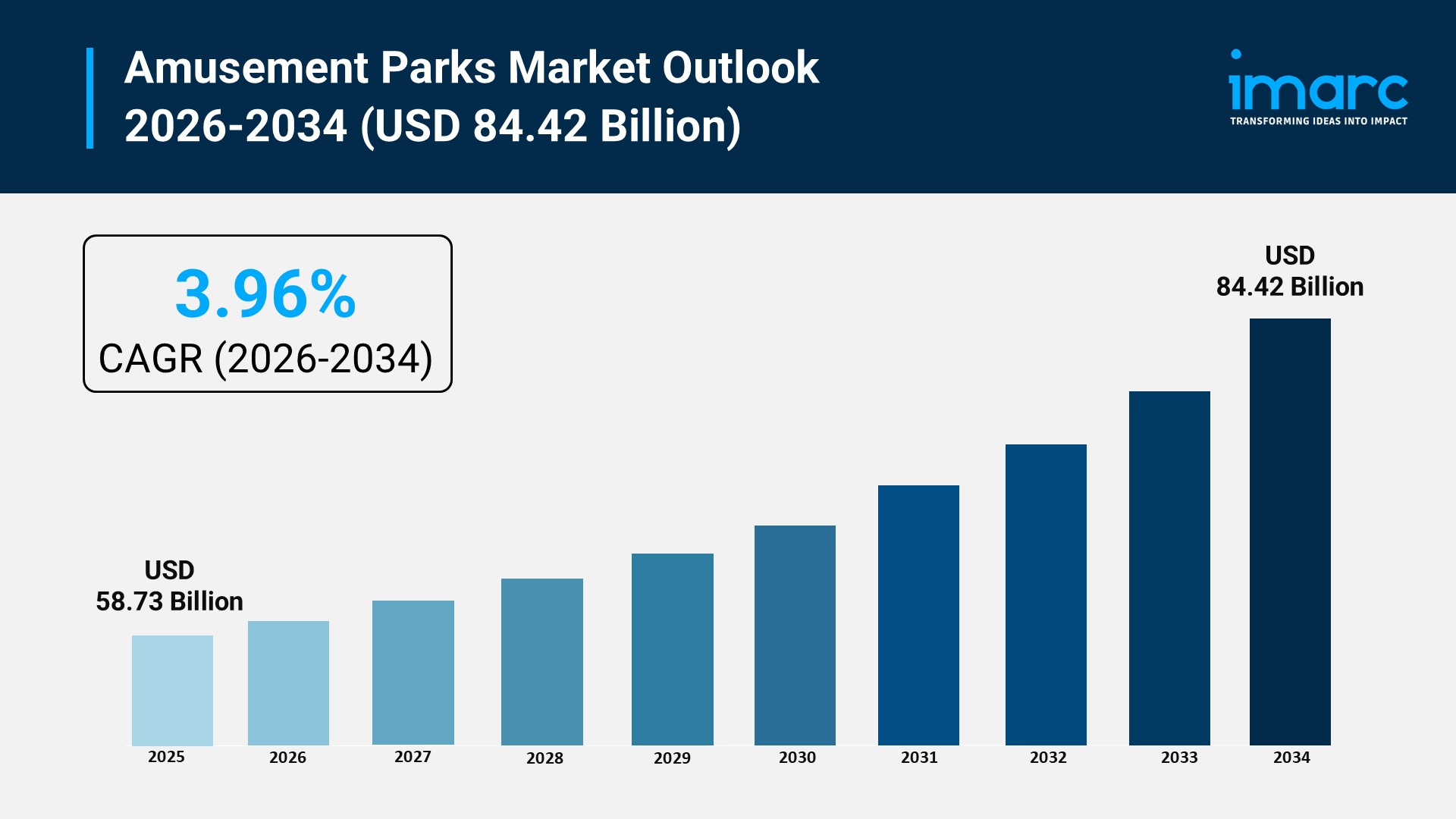
Global amusement parks market reached USD 58.73B in 2025, projected at USD 84.42B by 2034. Explore trends, drivers, segmentation, and key insights.
SHERDIAN, WY, UNITED STATES, April 2, 2026 /EINPresswire.com/ -- IMARC Group, a globally recognized market research firm specializing in industry intelligence across 200+ sectors, has published its latest market intelligence report on the Global Amusement Parks Market. According to the report, the global amusement parks market size reached USD 58.73 Billion in 2025 and is projected to reach USD 84.42 Billion by 2034, expanding at a CAGR of 3.96% during 2026–2034. The report provides a comprehensive analysis of market size, growth trends, key drivers, segmentation, regional dynamics, and competitive landscape, offering valuable insights for investors, business strategists, consultants, and C-suite executives.The amusement parks industry has evolved far beyond its fairground origins into a sprawling, multi-billion-dollar experiential entertainment sector. Today's parks function as all-in-one destinations blending themed rides, live entertainment, hospitality, dining, and retail under one roof. Growing consumer appetite for shared, real-world experiences, particularly among Millennials and Gen Z, continues to push footfall and per-visitor spending upward. Rapid urbanization, a strengthening middle class across Asia and the Middle East, and a resurgent global travel industry are collectively opening new demand corridors that park operators are actively pursuing.
𝐃𝐨𝐰𝐧𝐥𝐨𝐚𝐝 𝐚 𝐬𝐚𝐦𝐩𝐥𝐞 𝐏𝐃𝐅 𝐨𝐟 𝐭𝐡𝐢𝐬 𝐫𝐞𝐩𝐨𝐫𝐭: https://www.imarcgroup.com/amusement-parks-market/requestsample
𝐊𝐞𝐲 𝐌𝐚𝐫𝐤𝐞𝐭 𝐇𝐢𝐠𝐡𝐥𝐢𝐠𝐡𝐭𝐬
● 𝐌𝐚𝐫𝐤𝐞𝐭 𝐒𝐢𝐳𝐞 (𝟐𝟎𝟐𝟓): USD 58.73 Billion
● 𝐅𝐨𝐫𝐞𝐜𝐚𝐬𝐭 𝐕𝐚𝐥𝐮𝐞 (𝟐𝟎𝟑𝟒): USD 84.42 Billion
● 𝐆𝐫𝐨𝐰𝐭𝐡 𝐑𝐚𝐭𝐞: 3.96% CAGR (2026–2034)
● 𝐋𝐞𝐚𝐝𝐢𝐧𝐠 𝐑𝐞𝐠𝐢𝐨𝐧: Asia-Pacific (38.4% share)
● 𝐊𝐞𝐲 𝐏𝐥𝐚𝐲𝐞𝐫𝐬: Turner Construction, AECOM, Jacobs Engineering, Intamin, Bolliger & Mabillard, Mack Rides, Premier Rides
𝐄𝐦𝐞𝐫𝐠𝐢𝐧𝐠 𝐓𝐫𝐞𝐧𝐝𝐬 𝐓𝐫𝐚𝐧𝐬𝐟𝐨𝐫𝐦𝐢𝐧𝐠 𝐭𝐡𝐞 𝐀𝐦𝐮𝐬𝐞𝐦𝐞𝐧𝐭 𝐏𝐚𝐫𝐤𝐬 𝐈𝐧𝐝𝐮𝐬𝐭𝐫𝐲 𝐢𝐧 𝟐𝟎𝟐𝟔
𝐓𝐞𝐜𝐡𝐧𝐨𝐥𝐨𝐠𝐲-𝐃𝐫𝐢𝐯𝐞𝐧 𝐈𝐦𝐦𝐞𝐫𝐬𝐢𝐯𝐞 𝐄𝐱𝐩𝐞𝐫𝐢𝐞𝐧𝐜𝐞𝐬 AR, VR, 4D rides, and animatronics are no longer novelty they're table stakes for competitive park operators. Universal Studios' Epic Universe expansion in Orlando and Disney's continued rollout of digital-physical blended attractions set the benchmark. IoT-based crowd flow management tools, AI-powered mobile apps, and smart wristbands are now standard at major parks, cutting wait times while boosting in-park spending. Parks investing in next-gen immersive tech are reporting measurably higher Net Promoter Scores and repeat visit rates compared with those relying on legacy ride infrastructure alone.
𝐈𝐏 𝐋𝐢𝐜𝐞𝐧𝐬𝐢𝐧𝐠 𝐚𝐧𝐝 𝐅𝐫𝐚𝐧𝐜𝐡𝐢𝐬𝐞-𝐃𝐫𝐢𝐯𝐞𝐧 𝐓𝐡𝐞𝐦𝐢𝐧𝐠 Entertainment IP has become the single most powerful driver of new park development and visitor pull. Partnerships between studios and park operators such as Comcast/Universal, Warner Media/Six Flags, and Disney's internally managed IP universe demonstrate how beloved franchises convert passive fans into active park visitors. Themed lands built around established IPs like Harry Potter, Marvel, and Nintendo's Super Nintendo World have consistently outperformed non-IP-themed zones in both footfall and merchandise revenue. This trend is accelerating as streaming platforms look to parks as physical brand extensions.
𝐒𝐮𝐬𝐭𝐚𝐢𝐧𝐚𝐛𝐢𝐥𝐢𝐭𝐲 𝐚𝐧𝐝 𝐆𝐫𝐞𝐞𝐧 𝐏𝐚𝐫𝐤 𝐎𝐩𝐞𝐫𝐚𝐭𝐢𝐨𝐧𝐬 Environmental accountability is climbing the priority list for major park operators, driven by both regulation and consumer preference. Merlin Entertainments has committed to net-zero carbon operations by 2040, investing in solar installations, EV charging infrastructure, and waste reduction programs across its global park portfolio. SeaWorld has also launched conservation-linked guest experiences that double as brand differentiators. With roughly 30% of park visitors particularly younger demographics factoring sustainability credentials into destination choices, operators ignoring the green agenda risk meaningful brand and revenue consequences in the medium term.
𝐀𝐬𝐤 𝐀𝐧𝐚𝐥𝐲𝐬𝐭 𝐨𝐟 𝐂𝐮𝐬𝐭𝐨𝐦𝐢𝐳𝐞𝐝 𝐑𝐞𝐩𝐨𝐫𝐭: https://www.imarcgroup.com/request?type=report&id=2319&flag=E
𝐀𝐦𝐮𝐬𝐞𝐦𝐞𝐧𝐭 𝐏𝐚𝐫𝐤𝐬 𝐌𝐚𝐫𝐤𝐞𝐭 𝐒𝐞𝐠𝐦𝐞𝐧𝐭𝐚𝐭𝐢𝐨𝐧 𝐎𝐯𝐞𝐫𝐯𝐢𝐞𝐰
𝐁𝐲 𝐑𝐢𝐝𝐞𝐬
● 𝐌𝐞𝐜𝐡𝐚𝐧𝐢𝐜𝐚𝐥 𝐑𝐢𝐝𝐞𝐬: The dominant segment, encompassing roller coasters, drop towers, dark rides, and other land-based thrill attractions. Mechanical rides drive the highest share of ticket-based revenue and are the primary visitor draw at most large-format parks globally.
● 𝐖𝐚𝐭𝐞𝐫 𝐑𝐢𝐝𝐞𝐬: A fast-growing category benefiting from warm-climate market expansion and increasing consumer interest in combined theme-park and waterpark destinations. Dedicated waterpark additions have become a standard revenue diversification strategy for major park operators.
● 𝐎𝐭𝐡𝐞𝐫𝐬: Includes live entertainment zones, simulation experiences, arcades, carnival games, and virtual reality attractions segments growing rapidly as operators diversify beyond traditional ride infrastructure.
𝐁𝐲 𝐑𝐞𝐯𝐞𝐧𝐮𝐞 𝐒𝐨𝐮𝐫𝐜𝐞
● 𝐓𝐢𝐜𝐤𝐞𝐭: The largest revenue source, accounting for the majority of park income. Dynamic and tiered pricing strategies including annual passes, fast-pass upgrades, and off-peak discounts are helping operators optimize yield across seasonal demand cycles.
● 𝐅𝐨𝐨𝐝 𝐚𝐧𝐝 𝐁𝐞𝐯𝐞𝐫𝐚𝐠𝐞: A high-margin and growing revenue stream, with premium dining experiences, character dining events, and craft beverage offerings increasingly central to the in-park monetization strategy.
● 𝐌𝐞𝐫𝐜𝐡𝐚𝐧𝐝𝐢𝐬𝐞: Official merchandise tied to park IPs and exclusive collectibles remains a significant revenue driver, particularly at Disney and Universal properties where branded products extend the visitor relationship well beyond the park visit.
● 𝐇𝐨𝐭𝐞𝐥𝐬/𝐑𝐞𝐬𝐨𝐫𝐭𝐬: On-site accommodation is emerging as a key growth lever, enabling parks to capture multi-day visitor spending and differentiate through immersive themed resort experiences that extend brand engagement.
● 𝐎𝐭𝐡𝐞𝐫𝐬: Includes gaming, VIP experiences, event hosting, and corporate partnerships all growing contributors to diversified park revenue models.
𝐖𝐡𝐢𝐜𝐡 𝐑𝐞𝐠𝐢𝐨𝐧 𝐃𝐨𝐦𝐢𝐧𝐚𝐭𝐞𝐬 𝐭𝐡𝐞 𝐀𝐦𝐮𝐬𝐞𝐦𝐞𝐧𝐭 𝐏𝐚𝐫𝐤𝐬 𝐌𝐚𝐫𝐤𝐞𝐭?
Asia-Pacific leads the global amusement parks market, accounting for the largest regional share. North America and Europe follow as mature, high-value markets. Regional performance is shaped by urbanization pace, tourism infrastructure investment, and the size and age structure of the consumer population.
𝐀𝐬𝐢𝐚-𝐏𝐚𝐜𝐢𝐟𝐢𝐜 - 𝐃𝐨𝐦𝐢𝐧𝐚𝐧𝐭 𝐑𝐞𝐠𝐢𝐨𝐧𝐚𝐥 𝐌𝐚𝐫𝐤𝐞𝐭 Asia-Pacific commands the largest share of global amusement park revenue, driven by China, Japan, India, South Korea, and Southeast Asia. China and Japan alone house several of the world's highest-attendance parks, including those operated by Fantawild and Oriental Land (Tokyo Disneyland). India is an emerging growth pocket, with organized entertainment park penetration still low relative to its population size and improving middle-class purchasing power. Ongoing government investment in tourism and leisure infrastructure across ASEAN economies is further accelerating regional market development.
𝐍𝐨𝐫𝐭𝐡 𝐀𝐦𝐞𝐫𝐢𝐜𝐚 - 𝐌𝐚𝐭𝐮𝐫𝐞, 𝐇𝐢𝐠𝐡-𝐕𝐚𝐥𝐮𝐞 𝐌𝐚𝐫𝐤𝐞𝐭 North America remains the most monetized amusement park market globally, anchored by Disney World, Universal Studios, and an extensive network of regional parks operated by Cedar Fair, Six Flags, and SeaWorld. U.S. consumers consistently demonstrate strong willingness to spend on premium park experiences, with the average spend per domestic park visit including tickets, food, and merchandise continuing to climb. The recent merger of Cedar Fair and Six Flags is reshaping the competitive dynamics of the U.S. regional park segment.
𝐄𝐮𝐫𝐨𝐩𝐞 - 𝐄𝐬𝐭𝐚𝐛𝐥𝐢𝐬𝐡𝐞𝐝 𝐚𝐧𝐝 𝐄𝐱𝐩𝐞𝐫𝐢𝐞𝐧𝐜𝐞-𝐋𝐞𝐝 Europe features a well-developed theme park ecosystem anchored by Disneyland Paris, Merlin Entertainments' portfolio (Alton Towers, Thorpe Park, LEGOLAND), and Parques Reunidos' network. Western European consumers demonstrate strong preference for themed, family-friendly experiences with sustainability credentials. The UK, Germany, France, and the Netherlands are the core markets, with Central and Eastern Europe representing an underpenetrated growth opportunity for mid-size operators.
𝐌𝐢𝐝𝐝𝐥𝐞 𝐄𝐚𝐬𝐭 & 𝐀𝐟𝐫𝐢𝐜𝐚 - 𝐇𝐢𝐠𝐡-𝐆𝐫𝐨𝐰𝐭𝐡 𝐄𝐦𝐞𝐫𝐠𝐢𝐧𝐠 𝐑𝐞𝐠𝐢𝐨𝐧 The Middle East is one of the most actively developing amusement park markets globally, underpinned by Saudi Arabia's Vision 2030 entertainment strategy, Dubai's established tourism infrastructure, and Qiddiya the USD 8 billion entertainment city under development near Riyadh. IMG Worlds of Adventure in Dubai remains one of the world's largest indoor theme parks. Government-backed leisure investment across the GCC is expected to add significant new park capacity to the region over the coming years.
𝐋𝐚𝐭𝐢𝐧 𝐀𝐦𝐞𝐫𝐢𝐜𝐚 - 𝐊𝐞𝐲 𝐄𝐦𝐞𝐫𝐠𝐢𝐧𝐠 𝐎𝐩𝐩𝐨𝐫𝐭𝐮𝐧𝐢𝐭𝐲 Brazil and Mexico are the primary growth engines in Latin America, home to established operators such as Grupo Playcenter and Parques Reunidos. A growing urban middle class, improving retail and entertainment infrastructure, and high youth demographic skew make the region an attractive long-term investment destination for both global and regional park operators.
𝐂𝐨𝐦𝐩𝐞𝐭𝐢𝐭𝐢𝐯𝐞 𝐋𝐚𝐧𝐝𝐬𝐜𝐚𝐩𝐞: 𝐖𝐡𝐨 𝐀𝐫𝐞 𝐭𝐡𝐞 𝐓𝐨𝐩 𝐏𝐥𝐚𝐲𝐞𝐫𝐬 𝐢𝐧 𝐭𝐡𝐞 𝐀𝐦𝐮𝐬𝐞𝐦𝐞𝐧𝐭 𝐏𝐚𝐫𝐤𝐬 𝐌𝐚𝐫𝐤𝐞𝐭?
The global amusement parks market is moderately consolidated, with the top players holding a significant share of global revenue. Competition centers on IP strength, technological investment, geographic footprint, and the ability to deliver repeatable, premium guest experiences.
𝐓𝐡𝐞 𝐖𝐚𝐥𝐭 𝐃𝐢𝐬𝐧𝐞𝐲 𝐂𝐨𝐦𝐩𝐚𝐧𝐲 Key Parks: Disneyland Resort, Walt Disney World, Shanghai Disney Resort
The company remains a dominant force in the global amusement parks industry, leveraging its globally recognized franchises such as Marvel, Star Wars, and Pixar to drive footfall. Disney continues to invest heavily in park expansions and immersive storytelling experiences, with recent additions like Star Wars: Galaxy’s Edge attracting millions of visitors annually. Its integrated ecosystem of media, merchandise, and theme parks strengthens customer loyalty and spending per visitor.
𝐔𝐧𝐢𝐯𝐞𝐫𝐬𝐚𝐥 𝐏𝐚𝐫𝐤𝐬 & 𝐑𝐞𝐬𝐨𝐫𝐭𝐬 Key Parks: Universal Studios Florida, Universal Studios Japan, Universal Beijing Resort
Universal Parks & Resorts has strengthened its competitive position through high-impact, IP-driven attractions such as The Wizarding World of Harry Potter and Super Nintendo World. The company focuses on cutting-edge ride technology and immersive environments, with strong visitor growth driven by international expansions, particularly in Asia. Its strategy emphasizes blockbuster franchises and experiential innovation to maximize engagement.
𝐌𝐞𝐫𝐥𝐢𝐧 𝐄𝐧𝐭𝐞𝐫𝐭𝐚𝐢𝐧𝐦𝐞𝐧𝐭𝐬 Key Parks: LEGOLAND Parks, Madame Tussauds, Alton Towers
Merlin Entertainments operates a diverse portfolio of mid-sized attractions and theme parks across multiple regions. The company’s strength lies in its global footprint and family-oriented offerings, particularly through LEGOLAND parks, which continue to expand in Asia and North America. Merlin focuses on accessibility, local market adaptation, and strategic partnerships to maintain steady visitor growth.
𝐒𝐢𝐱 𝐅𝐥𝐚𝐠𝐬 𝐄𝐧𝐭𝐞𝐫𝐭𝐚𝐢𝐧𝐦𝐞𝐧𝐭 𝐂𝐨𝐫𝐩𝐨𝐫𝐚𝐭𝐢𝐨𝐧 Key Parks: Six Flags Magic Mountain, Six Flags Great Adventure
Six Flags is known for its thrill-based rides and regional park dominance, particularly in North America. The company emphasizes seasonal events, membership programs, and dynamic pricing strategies to drive repeat visits. Recent initiatives include park upgrades, enhanced guest experiences, and partnerships aimed at improving operational efficiency and profitability.
𝐂𝐞𝐝𝐚𝐫 𝐅𝐚𝐢𝐫 𝐄𝐧𝐭𝐞𝐫𝐭𝐚𝐢𝐧𝐦𝐞𝐧𝐭 𝐂𝐨𝐦𝐩𝐚𝐧𝐲 Key Parks: Cedar Point, Knott’s Berry Farm, Canada’s Wonderland
Cedar Fair has built a strong reputation for high-thrill attractions and well-maintained regional parks. The company focuses on capital investments in new rides, food and beverage offerings, and on-site accommodations to increase per capita spending. Its strategy also includes leveraging season passes and loyalty programs to maintain a stable customer base.
𝐂𝐨𝐧𝐬𝐮𝐦𝐞𝐫 𝐁𝐞𝐡𝐚𝐯𝐢𝐨𝐫 𝐀𝐧𝐚𝐥𝐲𝐬𝐢𝐬
● 𝐄𝐱𝐩𝐞𝐫𝐢𝐞𝐧𝐭𝐢𝐚𝐥 𝐬𝐩𝐞𝐧𝐝𝐢𝐧𝐠 𝐨𝐯𝐞𝐫 𝐦𝐚𝐭𝐞𝐫𝐢𝐚𝐥 𝐠𝐨𝐨𝐝𝐬: Over 60% of consumers globally particularly Millennials and Gen Z now prioritize experiences over product purchases, making leisure and entertainment a spending category that has proven structurally resilient through economic cycles.
● 𝐈𝐏 𝐚𝐧𝐝 𝐛𝐫𝐚𝐧𝐝 𝐥𝐨𝐲𝐚𝐥𝐭𝐲 𝐚𝐬 𝐯𝐢𝐬𝐢𝐭 𝐝𝐫𝐢𝐯𝐞𝐫𝐬: Consumers are increasingly choosing park destinations based on specific IP or franchise attachment. Parks with exclusive themed lands tied to beloved franchises consistently outperform non-IP counterparts in visit intent surveys.
● 𝐒𝐨𝐜𝐢𝐚𝐥 𝐦𝐞𝐝𝐢𝐚 𝐚𝐦𝐩𝐥𝐢𝐟𝐢𝐜𝐚𝐭𝐢𝐨𝐧: Instagram, TikTok, and YouTube content creation at parks is a free marketing multiplier. Parks investing in photogenic and share-worthy activations are driving measurably higher organic reach and visit intent among younger demographics.
● 𝐒𝐮𝐬𝐭𝐚𝐢𝐧𝐚𝐛𝐢𝐥𝐢𝐭𝐲 𝐚𝐰𝐚𝐫𝐞𝐧𝐞𝐬𝐬 𝐢𝐬 𝐠𝐫𝐨𝐰𝐢𝐧𝐠: Approximately 30% of park visitors skewing younger factor a park's environmental and conservation credentials into their visit and purchasing decisions, creating pressure on operators to accelerate green initiatives.
● 𝐏𝐫𝐞𝐦𝐢𝐮𝐦 𝐞𝐱𝐩𝐞𝐫𝐢𝐞𝐧𝐜𝐞 𝐰𝐢𝐥𝐥𝐢𝐧𝐠𝐧𝐞𝐬𝐬: Consumers are showing strong willingness to pay for VIP skip-the-line access, personalized experiences, and character dining. Upsell revenue per visitor has become a critical margin lever for park operators globally.
𝐎𝐩𝐩𝐨𝐫𝐭𝐮𝐧𝐢𝐭𝐢𝐞𝐬 𝐚𝐧𝐝 𝐅𝐮𝐭𝐮𝐫𝐞 𝐎𝐮𝐭𝐥𝐨𝐨𝐤
The amusement parks market research report identifies strong growth opportunities driven by expansion into under-penetrated emerging markets — particularly tier-2 and tier-3 cities across South and Southeast Asia where entertainment infrastructure is still catching up with rising consumer spending capacity. The accelerating convergence of digital entertainment with physical park experiences, through AR/VR integrations, mobile-first personalization, and AI-driven visitor management systems, is expected to redefine the guest experience paradigm over the coming years.
The rise of hospitality-integrated park models where themed hotels, resort experiences, and multi-day packages form the core revenue architecture presents a significant monetization opportunity for operators currently dependent on single-day gate revenue. Additionally, Middle Eastern government investment pipelines and the ongoing formalization of India's entertainment infrastructure provide two of the most compelling greenfield opportunities in the global park development landscape. Overall, the market outlook remains positive, supported by demographic tailwinds, technology-driven experience innovation, and sustained global travel recovery.
𝐖𝐡𝐚𝐭 𝐃𝐨𝐞𝐬 𝐓𝐡𝐞 𝐅𝐮𝐥𝐥 𝐑𝐞𝐩𝐨𝐫𝐭 𝐂𝐨𝐯𝐞𝐫?
If you are tracking the amusement parks market whether for investment decisions, market entry planning, competitive benchmarking, or strategic advisory IMARC Group's report gives you everything in one place:
● Complete market sizing with revenue forecasts through 2034
● Quantified growth driver analysis with impact scoring
● Sub-segment breakdowns by rides, revenue source, and age group with individual CAGR and share data
● Country-level data for all major markets including the United States, China, India, Saudi Arabia, and more
● Competitive profiles of 10 leading companies with SWOT analysis
● Porter's Five Forces, value chain analysis, and pricing intelligence
● Latest regulatory developments and their market impact
Digital Marketing Market Research Report
B2B Payments Market Research Report
𝐒𝐮𝐠𝐚𝐫-𝐅𝐫𝐞𝐞 𝐂𝐨𝐧𝐟𝐞𝐜𝐭𝐢𝐨𝐧𝐞𝐫𝐲 𝐌𝐚𝐫𝐤𝐞𝐭: https://www.imarcgroup.com/sugar-free-confectionery-market
𝐎𝐩𝐞𝐧 𝐁𝐚𝐧𝐤𝐢𝐧𝐠 𝐌𝐚𝐫𝐤𝐞𝐭: https://www.imarcgroup.com/open-banking-market
𝐈𝐧𝐬𝐮𝐫𝐚𝐧𝐜𝐞 𝐅𝐫𝐚𝐮𝐝 𝐃𝐞𝐭𝐞𝐜𝐭𝐢𝐨𝐧 𝐌𝐚𝐫𝐤𝐞𝐭: https://www.imarcgroup.com/insurance-fraud-detection-market
𝐍𝐨𝐭𝐞: If you require specific details, data, or insights that are not currently included in the scope of this report, we are happy to accommodate your request. As part of our customization service, we will gather and provide the additional information you need, tailored to your specific requirements. Please let us know your exact needs, and we will ensure the report is updated accordingly to meet your expectations.
𝐀𝐛𝐨𝐮𝐭 𝐔𝐬
IMARC Group is a global management consulting firm that helps the world's most ambitious changemakers create a lasting impact. The company provides a comprehensive suite of market entry and expansion services. IMARC offerings include thorough market assessment, feasibility studies, company incorporation assistance, factory setup support, regulatory approvals and licensing navigation, branding, marketing and sales strategies, competitive landscape and benchmarking analyses, pricing and cost research, and procurement research.
Elena Anderson
IMARC Services Private Limited
+1 201-971-6302
email us here
Legal Disclaimer:
EIN Presswire provides this news content "as is" without warranty of any kind. We do not accept any responsibility or liability for the accuracy, content, images, videos, licenses, completeness, legality, or reliability of the information contained in this article. If you have any complaints or copyright issues related to this article, kindly contact the author above.
